Are you a Fort Worth veteran living with a condition linked to Agent Orange?
At Glover Luck LLP, we offer dedicated Agent Orange exposure representation grounded in more than a decade of veterans benefits practice.
If you are living with an illness the VA has declined to connect to your military service, the denial frequently reflects a finding that you were never exposed to herbicides at all. Our Fort Worth, TX Agent Orange exposure lawyer establishes where and when you served, measures the diagnosis against the conditions the VA recognizes, and pursues the appropriate review of an unfavorable decision. Glover Luck LLP has represented veterans in disability matters since 2014. Consultations concerning herbicide claims are provided at no cost.
Agent Orange Exposure Lawyer Fort Worth, TX
Agent Orange was one of several herbicides sprayed by United States forces during the Vietnam era, and the dioxin it contained has been associated with a defined group of cancers and chronic illnesses. Congress responded by directing the VA to presume service connection for those conditions in veterans who served in designated locations during designated periods.
That presumption is the heart of most herbicide claims. Where it applies, a veteran does not have to prove that service caused the illness, because the law supplies the link. The difficulty lies in the two questions that come first. Did the veteran serve in a place and period the regulations recognize, and does the diagnosis appear on the list the VA maintains? Our Agent Orange attorneys in Fort Worth address both questions before a claim is submitted.
Types of Agent Orange Exposure Cases We Handle in Fort Worth, TX
Herbicide claims reach our firm at every stage, from a first filing to an appeal that has already been denied twice. Some involve conditions the VA concedes, and others require us to prove exposure the agency has refused to acknowledge. The matters below reflect the range of work our Fort Worth attorneys perform for veterans exposed to Agent Orange and for the families they leave behind.
- Presumptive condition claims. These are filings for illnesses the VA already associates with herbicide exposure. Where a diagnosis appears among the presumptive conditions, the work centers on establishing qualifying service and documenting severity.
- Service connection. Exposure outside a recognized location must be proven directly, using unit records, flight logs, and duty assignments. We develop that evidence where the presumption is unavailable.
- Service-connected disability. A herbicide claim frequently arrives alongside other conditions arising from the same period of service. We evaluate the record as a whole rather than in isolation.
- VA disability compensation. The rating assigned to a presumptive condition determines the monthly award. We examine whether the assigned percentage reflects the medical evidence.
- Unemployability (TDIU). Ischemic heart disease, Parkinson’s disease, and advanced cancers frequently end a veteran’s working life. Where the condition prevents substantially gainful employment, we pursue a total rating.
- Camp Lejeune water contamination. Toxic exposure claims share a common structure, and veterans exposed at more than one location often have overlapping entitlements. We identify each avenue available.
- Gulf War Syndrome. A later generation of veterans faces comparable proof problems arising from a different deployment. Our approach to undiagnosed illness draws on the same evidentiary methods.
- Death benefits. When a presumptive cancer proves fatal, the surviving spouse or child may be entitled to monthly compensation. We handle those claims for families across the Metroplex.
- Accrued benefits claims. A herbicide claim pending at the veteran’s death does not simply lapse. An eligible survivor may pursue the balance the VA never paid.
- Secondary conditions. Diabetes brings neuropathy and kidney disease, and cancer treatment brings lasting complications. Each of these may support an additional rating through secondary service connection.
Why Choose Glover Luck LLP as my Agent Orange Exposure Lawyer in Fort Worth, TX?
Recognized Standing Within the Veterans Bar
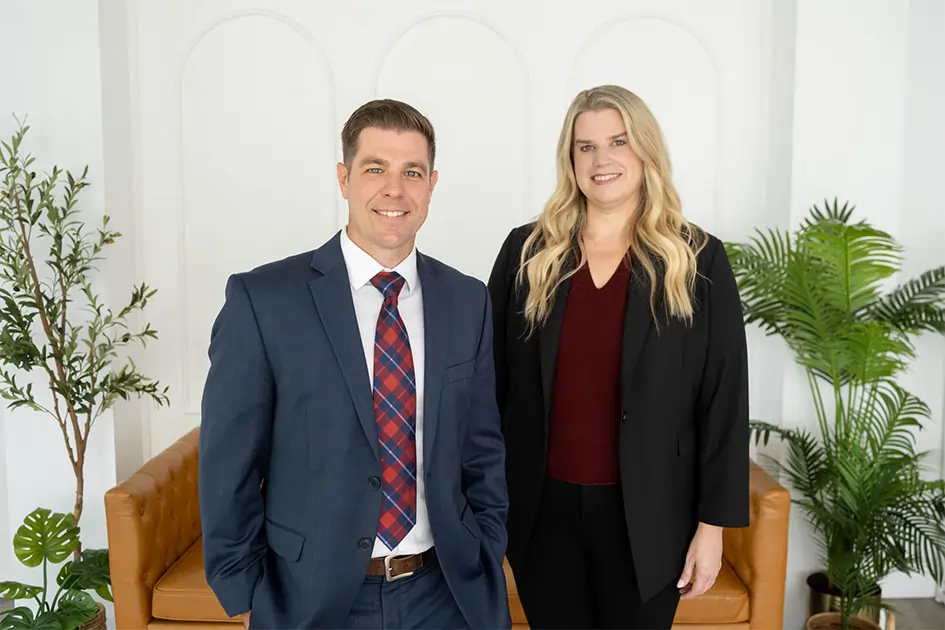
Julie L. Glover co-founded Glover Luck LLP and is accredited by the VA to represent veterans before the agency. She serves on the board of the National Organization of Veterans’ Advocates and previously chaired the Military and Veterans Law Section of the State Bar of Texas. She has spoken on veterans law at legal conferences and law schools, and she holds a Juris Doctor from Texas A&M School of Law together with an LL.M. in Taxation. Herbicide claims are decided by how the governing regulations are applied, and that application is the substance of the work.
Claims Carried From the Regional Office Into Federal Court
Adam R. Luck co-founded the firm in 2014 and is admitted to the United States Court of Appeals for Veterans Claims, the United States Court of Appeals for the Federal Circuit, and the Supreme Court of the United States. Veterans throughout Tarrant County retain our veterans disability lawyer in Fort Worth, TX for claims that begin at the regional office and continue into federal court. Over the years our attorneys have recovered benefits for veterans whose herbicide claims the VA had refused.
Understanding Agent Orange Exposure Cases
What Are Important Aspects of an Agent Orange Exposure Case?
Every herbicide claim rests on three findings, and a denial usually reflects a failure on one of them rather than on all three. The first is qualifying service. The second is a recognized diagnosis. The third is the severity that supports a compensable rating.
- Establishing service in a location and period the regulations recognize
- Confirming that the diagnosis appears among the associated conditions
- Documenting severity sufficient to warrant a rating of at least ten percent
- Identifying secondary conditions that flow from the primary illness
- Preserving the earliest possible effective date for payment
The presumption is rebuttable. The agency may overcome it with affirmative evidence that the illness arose from another cause, which is why the medical record deserves attention even in a claim that appears straightforward.
Presumptive Conditions, Exposure, and Compensation in Agent Orange Cases
Service in the Republic of Vietnam between January 9, 1962 and May 7, 1975 carries a presumption of herbicide exposure. Congress has since extended that presumption. Veterans who served offshore of Vietnam during the same period are covered, as are those who served at bases in Thailand, in Laos, in specified provinces of Cambodia, and at Johnston Atoll, Guam, and American Samoa during defined periods. Certain Air Force personnel who worked aboard contaminated C-123 aircraft after the war are covered as well.
The conditions the VA associates with herbicide exposure include several cancers, ischemic heart disease, Parkinson’s disease, type 2 diabetes, and a group of skin and blood disorders. Hypertension and monoclonal gammopathy of undetermined significance were added to that group in 2022. Most of these conditions may become manifest at any point after service, although a small number must appear within a year of the last exposure.
Compensation follows the rating assigned to the condition, paid monthly and adjusted for dependents. A veteran whose illness prevents substantially gainful employment may qualify for a total rating even where the schedular percentage falls short. Where the illness proves fatal, a surviving spouse, child, or dependent parent may become entitled to monthly benefits in her or his own right.
What Should You Bring to Your Agent Orange Exposure Consultation?
The strength of a herbicide claim is usually visible from a handful of documents. We ask veterans and families to bring the following where they are available:
- The DD-214 and any other separation or assignment records
- Records showing units, duty stations, and dates of deployment
- Medical records establishing the diagnosis and its severity
- Any prior VA decision letters or rating decisions
- Records of treatment received outside the VA system
During the meeting we will discuss what the service record appears to establish, whether the presumption is available, and which conditions the evidence may support.
What Is The Agent Orange Exposure Case Timeline?
Herbicide claims move on the ordinary VA schedule, and the pace depends heavily on whether exposure is conceded or contested. A claim supported by the presumption may be decided in months, while a claim requiring direct proof of exposure often takes considerably longer.
- An intent to file preserves the effective date while evidence is gathered
- The claim is filed with supporting service and medical records
- The VA schedules an examination where the medical evidence is incomplete
- The regional office issues a rating decision
- An unfavorable decision may be challenged within one year of the notice
That final period deserves particular attention. A veteran who allows the year to pass without seeking review generally must begin again with a new claim, and a new claim ordinarily carries a later effective date and a smaller retroactive award. Conditions diagnosed after separation remain claimable throughout, since the presumption does not depend on treatment during service.
What Are Important Texas Legal Resources for Agent Orange Exposure Cases?
Herbicide claims are governed by federal statute and regulation. The authorities below allow veterans and families to locate the governing rules directly, and they are offered for reference rather than as a substitute for representation.
- 38 CFR 3.309 lists the diseases the VA associates with exposure to certain herbicide agents.
- 38 CFR 3.307 sets out the locations, service periods, and manifestation requirements that govern the exposure presumption.
- 38 U.S.C. 1116A extends the presumption to veterans who served offshore of the Republic of Vietnam.
- The PACT Act, enacted in 2022, added hypertension and monoclonal gammopathy of undetermined significance along with several new locations.
- The implementing rulemaking published by the VA explains how the agency incorporated those changes into its adjudication regulations.
Reach Out to Glover Luck LLP to Schedule a Consultation
Many Vietnam veterans waited decades before a diagnosis connected their illness to something that happened in their twenties. Our Fort Worth Agent Orange exposure lawyer can review the service record and the medical evidence and discuss what the regulations may permit. Contact us to arrange a consultation at no cost. Glover Luck LLP represents veterans and surviving family members throughout Tarrant County.
If you need assistance appealing your service-connected disability claim, please contact our veterans law office for a free consultation at 866-849-3287 or 214-741-2005. We are based in Dallas, Texas, and represent veterans all over the United States.