Were you harmed by treatment you received at a VA facility in Fort Worth?
At Glover Luck LLP, we have represented veterans in claims against the VA since 2014, and our founders are accredited to appear before the agency and before the federal courts that review its decisions.
If a procedure, a course of treatment, or a missed diagnosis at a VA facility left you worse than before, federal law provides a remedy separate from any claim for a service-connected condition. Our Fort Worth, TX Section 1151 lawyer compares the condition before and after the care in question, identifies where the treatment departed from an accepted standard, and presents the claim to the agency responsible for that care. Glover Luck LLP has represented veterans in disability matters since 2014. Consultations are provided at no cost.
Section 1151 Lawyer Fort Worth, TX
Section 1151 refers to the provision of federal law allowing compensation when VA hospital care, medical or surgical treatment, or an examination causes additional disability or death. Benefits are paid in the same manner as though the disability were service connected, even though the underlying injury has no connection to military service.
Two routes lead to an award. A veteran may establish fault, meaning carelessness, negligence, lack of proper skill, an error in judgment, or a similar failing on the agency’s part. Alternatively, a veteran may establish that the harm resulted from an event a reasonable provider would not have regarded as an ordinary risk of the treatment. Our Section 1151 attorneys in Fort Worth assess both routes before a claim is filed.
Types of Section 1151 Cases We Handle in Fort Worth, TX
These claims arise from ordinary encounters with the health system rather than from anything that happened in uniform. A delayed diagnosis, a surgical complication, a medication error, or an inadequate examination may each support a claim. The matters below reflect the work our Fort Worth attorneys perform for veterans harmed by VA care and for their families.
- Additional disability from VA care. This is the central claim, covering harm caused by hospital care, treatment, or examination at a VA facility. Documented medical errors within the VA system frequently form the basis of these filings.
- Federal tort claims. A separate remedy exists under federal tort law, and the two paths interact. We evaluate which route fits the circumstances and how an award under one affects the other.
- Medical malpractice VA disability. Where the harm resulted from a departure from accepted medical practice, the fault route applies. We work with the treatment record to identify where the standard of care was not met.
- Service connection. A condition worsened by VA treatment may also be connected to service directly. We examine whether both theories are available on the same facts.
- Service connected disability. Veterans pursuing a Section 1151 claim frequently hold existing ratings that interact with the new claim. We assess the whole record rather than the new injury alone.
- VA disability compensation. Compensation follows the rating assigned to the additional disability. We examine whether the assigned percentage reflects the documented impairment.
- VA TDIU. An injury sustained during treatment can end a veteran’s working life as surely as one sustained in service. Where employment is no longer sustainable, we pursue a total rating.
- VA TBI. Anoxic and hypoxic injuries during surgery or anesthesia produce lasting cognitive deficits. These claims depend on detailed neuropsychological findings.
- Psychiatric disability claims. Serious harm during medical care frequently produces lasting psychological effects. Conditions arising from the treatment itself may be compensable alongside the physical injury.
- Death benefits claims. Where VA care caused or hastened a veteran’s death, a surviving spouse, child, or dependent parent may be entitled to monthly compensation. We handle those claims for families across the Metroplex.
Why Choose Glover Luck LLP as My Section 1151 Lawyer in Fort Worth, TX?
Experience With Tort Claims Against the VA
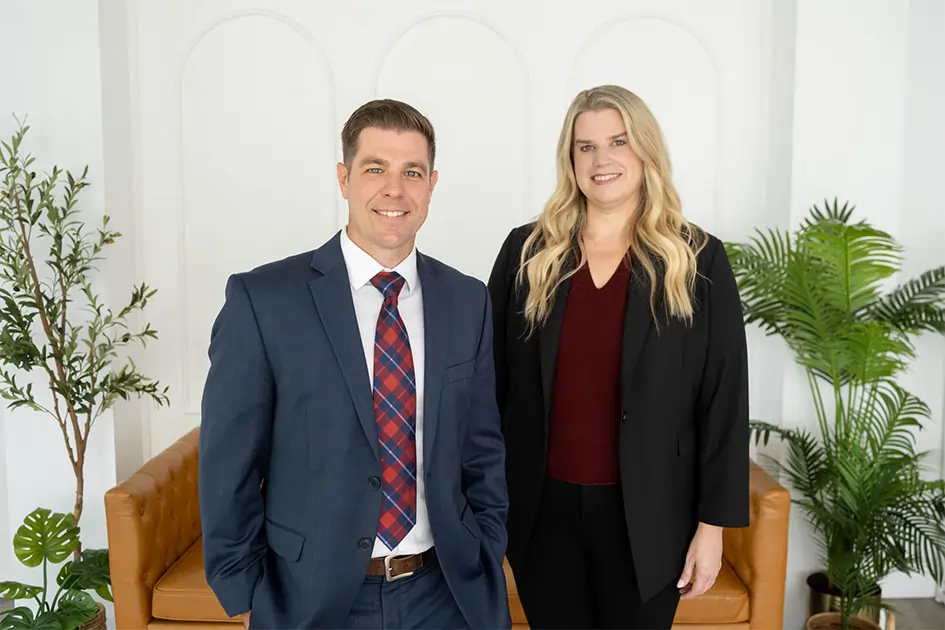
Julie L. Glover and Adam R. Luck founded Glover Luck LLP in 2014. Both represent veterans in tort claims against the VA as well as in disability matters. That combination matters in this area, because the same set of medical records may support a Section 1151 claim, a federal tort claim, or both, and the choice between them carries consequences. Veterans treated at facilities across North Texas consult our veterans disability lawyer in Fort Worth, TX about which route the evidence supports.
Backgrounds That Inform the Work
Adam Luck advised active service members and veterans as a licensed financial advisor before entering legal practice, and he entered law school after recognizing how many of those clients had legal needs no one was addressing. Julie Glover represents veterans through every phase of the benefits process and before the courts that review agency decisions. Both are accredited by the VA and belong to the National Organization of Veterans’ Advocates. Over more than a decade, our attorneys have helped veterans obtain compensation after an initial denial.
Understanding Section 1151 Cases
Fault, Foreseeability, and Compensation in Section 1151 Cases
Compensation requires a qualifying additional disability, which means harm that was not the result of the veteran’s own willful misconduct and that the VA’s care actually caused. The agency measures this by comparing the veteran’s condition immediately before the treatment with the condition after it concluded, examining each body part or system separately. Proximate cause may then be shown in either of two ways:
- Fault on the agency’s part, established by showing that the VA failed to exercise the degree of care expected of a reasonable health care provider
- Absence of informed consent, established by showing that the VA furnished the care without substantially complying with its consent requirements
- An event not reasonably foreseeable, meaning one a reasonable provider would not have treated as an ordinary risk of the procedure
An award is paid in the same manner as compensation for a service-connected disability, at the rate corresponding to the assigned rating, with additional amounts for dependents. Where the injury proves fatal, survivors may become entitled to dependency and indemnity compensation on the same basis.
What Are Important Aspects of a Section 1151 Case?
These claims are decided on medical evidence, and the medical evidence usually comes from the same institution that provided the care. Obtaining a complete record is therefore the first task rather than a formality.
- Securing the full treatment record, including notes, imaging, and consent documents
- Establishing the baseline condition immediately before the care in question
- Identifying the specific departure from accepted practice or the unforeseeable event
- Obtaining an independent medical opinion on causation
- Separating the effects of the treatment from the natural progression of the underlying illness
That final point accounts for a substantial share of denials. A poor outcome is not itself compensable, and an unfavorable result that represents the expected course of a serious illness will not support an award. The question is whether the care made the veteran worse than the illness alone would have.
What Should You Bring to Your Section 1151 Consultation?
A first meeting is more productive when the treatment history is assembled. Where they are available, we ask veterans and families to bring the following:
- Records of the treatment, procedure, or examination at issue
- Any consent forms signed before the procedure
- Medical records from before the treatment showing the prior condition
- Records of care received afterward, including from providers outside the VA
- Any VA decision letters or rating decisions already issued
During the meeting we will discuss what the records appear to show, whether fault or foreseeability offers the stronger route, and how a Section 1151 claim compares with the alternative remedy.
What Is The Section 1151 Case Timeline?
A Section 1151 claim carries no filing deadline comparable to the limitations period governing an ordinary injury suit, which means a veteran who learns years later that treatment caused lasting harm may still file. The federal tort remedy operates differently and is subject to its own deadline, so the two should be evaluated together rather than in sequence.
- The claim is filed identifying the treatment believed to have caused the harm
- The VA obtains the treatment records from the facility involved
- A medical opinion is sought on causation and on the standard of care
- The regional office issues a decision on entitlement
- An unfavorable decision may be challenged within one year of the notice
These claims commonly take longer than a routine disability filing, because the agency must obtain records and secure an opinion before deciding. Contested causation extends the process further, particularly where the case proceeds on appeal.
What Are Important Texas Legal Resources for Section 1151 Cases?
Texas medical negligence law does not govern these claims. Federal standards do, and a veteran who wants to read those standards can begin with the sources below. None of them replaces representation, but each shows what the agency is required to weigh.
- The implementing rulemaking published by the VA explains the reasoning behind the fault and foreseeability standards.
- 38 CFR 3.361 sets out how the agency determines causation, fault, informed consent, and foreseeability.
- The related adjudication regulations collect the provisions governing evaluation and special monthly compensation.
- 38 U.S.C. 1151 authorizes compensation for additional disability or death caused by VA care, treatment, examination, or vocational rehabilitation.
- The general compensation provisions of Title 38 place Section 1151 within the wider compensation framework, including the treatment of amounts recovered elsewhere.
Reach Out to Glover Luck LLP to Schedule a Consultation
Learning that treatment intended to help caused lasting harm is difficult, and it is more difficult when the treatment came from the institution a veteran was told to trust. Our Fort Worth Section 1151 lawyer can review the medical records and discuss what the evidence may support. Contact us to arrange a consultation at no cost. Glover Luck LLP represents veterans and surviving family members throughout Tarrant County.
If you need assistance appealing your service-connected disability claim, please contact our veterans law office for a free consultation at 866-849-3287 or 214-741-2005. We are based in Dallas, Texas, and represent veterans all over the United States.