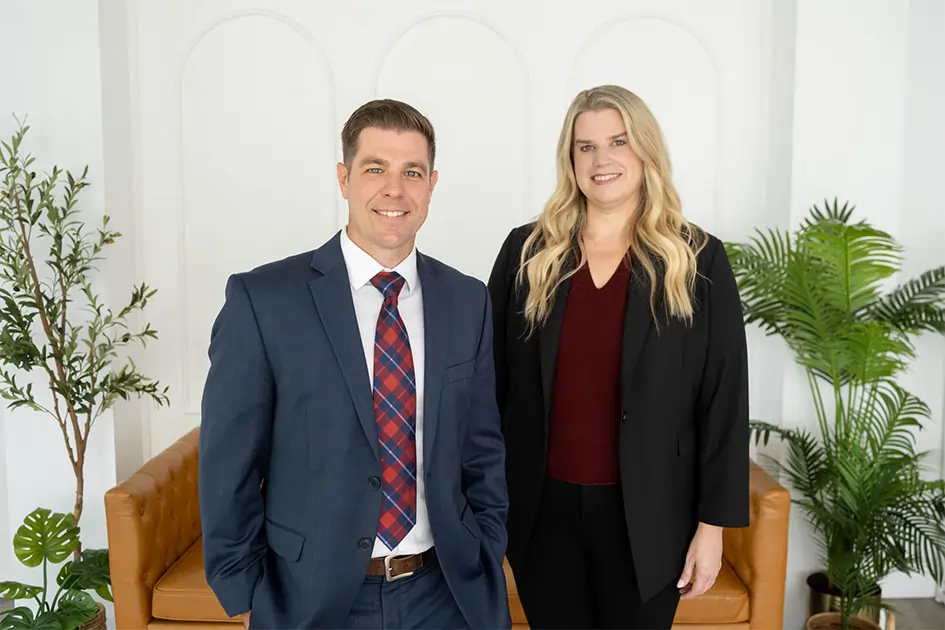
California VA disability compensation lawyers with over twelve years of experience.
If a service-connected condition has left you without the benefits you are owed, a California VA disability compensation lawyer can help you pursue a fair result. Glover Luck LLP has represented veterans for more than twelve years across disability claims, appeals, and hearings at both the agency and court levels. Our attorneys hold accreditation from the Department of Veterans Affairs and advocate for veterans throughout the country. Contact our office to discuss your disability compensation claim.
VA Disability Compensation Lawyer California
VA disability compensation is a tax-free monthly payment to veterans whose service caused or worsened a physical or mental condition. The amount depends on a rating the VA assigns, which reflects how severely the condition limits work and daily life. Conditions can range from orthopedic injuries and hearing loss to respiratory illness and mental health disorders, and each carries its own rating criteria.
Eligibility depends on service connection. A veteran must generally show a current disability, an in-service event or injury, and a link between the two. When a veteran has more than one rated condition, the VA combines the ratings using its own formula rather than simply adding them, which is a common source of confusion for those reviewing their own decisions. Understanding how that calculation works often makes the difference between an adequate award and one that falls short.
Types of VA Disability Compensation Cases We Handle in California
Disability compensation covers a wide range of conditions and claim situations. The evidence and strategy shift depending on the condition, the service history, and where the claim stands. A veteran filing a first claim faces a different task than one challenging a rating that came back too low. Our attorneys handle claims across that full range.
- Initial disability claims. A first claim sets the foundation for everything that follows. We help veterans assemble the diagnosis, service records, and medical evidence needed to establish service connection from the start, since errors at this stage can be difficult to undo later.
- Increased rating claims. A condition that has worsened may justify a higher evaluation. We pursue a higher rating when the assigned percentage no longer reflects the severity of the disability.
- Secondary condition claims. One service-connected disability can lead to another. We pursue secondary service connection for conditions that develop as a consequence of an existing rated disability.
- Presumptive condition claims. Certain conditions are presumed connected to service based on exposure or circumstances. We help veterans pursue benefits for a presumptive condition without the usual burden of proving direct causation.
- Total disability based on individual unemployability. When a service-connected condition prevents steady work, individual unemployability can provide compensation at the total rating short of a one-hundred percent schedular evaluation.
- Effective date and back pay disputes. The date a claim takes effect can mean years of benefits owed. We pursue the correct effective date and the back pay that follows from it, particularly in cases where the VA has delayed or undervalued a claim.
- Appeals after a denial. A denial does not close the door. We carry cases forward after an initial claim denial through higher-level review, supplemental claims, and Board appeals.
VA Disability Compensation Lawyer California: Why Choose Glover Luck LLP?
Founders Who Built the Firm Around Veterans
Glover Luck LLP was founded to confront the difficulties veterans face in securing the benefits they earned. Julie L. Glover represents veterans at every phase of the disability process, including appeals and tort claims against the agency. Adam R. Luck handles disability and pension claims, discharge upgrades, and related matters, drawing on his earlier work advising service members as a financial advisor. Both are accredited by the Department of Veterans Affairs to represent veterans nationwide, and both belong to the National Organization of Veterans’ Advocates, a leading professional body in this area of law.
Representation From the Claim Through the Courts
We pursue compensation claims at the regional office and, when necessary, before the U.S. Court of Appeals for Veterans Claims. For more than twelve years, our firm has handled claims that stalled, ratings that fell short, and denials that veterans were told were final. Many veterans come to us after a confusing rating decision or a denial they did not understand, and our first task is often simply explaining what the VA actually decided and why. We offer free consultations for disability compensation claims, so a first review costs nothing.
What Is Important to Understand About VA Disability Compensation Cases?
Service Connection, Ratings, and Compensation for Disability Claims
A disability compensation claim depends on several connected elements. Knowing what each one involves helps a veteran understand what the VA evaluates and where a claim can weaken. A shortfall in any single element can reduce the rating or stall the claim altogether.
- Service connection. The condition must be linked to an injury, illness, or event during military service.
- Current disability. A present diagnosis is required, since compensation addresses ongoing impairment.
- Disability rating. The VA assigns a percentage reflecting how severely the condition affects function.
- Combined rating. Multiple conditions are merged through the VA’s formula rather than added together.
- Effective date. This sets the point from which compensation is owed and can affect years of payments.
Veterans whose conditions appeared only after discharge often ask about conditions diagnosed after service, which can still qualify when the link to service is shown.
What Are Important Aspects of a VA Disability Compensation Case?
The result of a compensation claim usually depends on the strength of the evidence and how clearly it ties the condition to service. The VA decides claims on the record before it, so what a veteran submits often determines the outcome. A few elements carry particular weight.
- The medical evidence establishing the diagnosis and its severity.
- The service records documenting the in-service event or injury.
- The nexus opinion connecting the current condition to service.
- The record of how the condition affects work and daily life.
Assembling that evidence early shapes the outcome. Knowing what counts as evidence helps a veteran build a claim that can withstand VA scrutiny.
What Is the VA Disability Compensation Case Timeline?
Compensation claims follow a defined path, though timing varies with the VA’s workload and the complexity of the evidence. A typical claim moves through several stages.
- Gathering the diagnosis, service records, and supporting evidence.
- Filing the claim and attending any required VA examination.
- Receiving the initial rating decision from the regional office.
- Seeking higher-level review or a supplemental claim if the decision is inadequate.
- Appealing to the Board of Veterans’ Appeals when further review is warranted.
The compensation and pension examination frequently drives the rating, so knowing how to prepare for examinations can affect the result.
What Should You Bring to Your VA Disability Compensation Consultation?
Bringing the right materials lets us evaluate a claim accurately. Helpful documents include the following:
- Service records and separation documents, such as a DD-214.
- Medical records reflecting the diagnosis and treatment of the condition.
- Any prior VA decisions, rating notices, or correspondence.
- A written account of the in-service event and the condition’s ongoing effects.
We use the consultation to review these materials, explain the available options, and answer your questions. We keep veterans informed throughout the process and respond without unnecessary delay. There is no obligation to retain our firm after that initial review, and the consultation itself is free.
What Are Important California Legal Resources for VA Disability Compensation Cases?
VA disability claims are governed by federal law, so the most reliable resources are federal rather than California state sources. Because the standards apply nationwide, a veteran’s location does not change how a claim is decided, though local VA medical facilities still play a role in examinations and treatment records. The following references help veterans understand how compensation claims are evaluated.
- The VA disability eligibility page explains who qualifies for compensation based on a service-connected condition.
- The how to file page describes the steps and forms involved in starting a claim.
- The principles of service connection in Title 38 set out the rules that govern these claims.
- The Board of Veterans’ Appeals describes how appeals are reviewed and decided.
Reach Out to Glover Luck LLP to Schedule a Consultation
If a service-connected condition has gone unrecognized or undervalued, our California VA disability compensation attorneys are ready to help. We offer free consultations and represent veterans through every stage of the claims and appeals process. During your consultation, we will review your records and explain your options in plain terms. Contact us today to get started on your claim.
VA Disability Compensation Statistics in California

California is home to more than 1.5 million veterans, placing it second in the nation by total veteran population. According to CalVet, the state’s veterans served across every era from World War II through current operations. That population creates heavy demand on the VA’s three regional offices in Los Angeles, Oakland, and San Diego, each of which processes thousands of disability claims per fiscal year.
Nationally, the VA completed a record 2.5 million disability compensation and pension claims in fiscal year 2024, a 27% increase over the prior year. The VBA claims data showed a grant rate of approximately 64%, meaning more than a third of claims filed were initially denied. For California veterans, those numbers represent a large volume of denied or underrated claims that may warrant further action through a supplemental filing or Board appeal.
- California’s veteran population exceeds 1.5 million, second only to Texas, according to VA population data.
- The VA processed more than 2.5 million disability claims nationally in FY 2024, a record.
- Approximately 36% of initial VA disability claims were denied across all regional offices.
- The average disability rating granted in FY 2024 was 70%, equating to over $20,000 per year in tax-free compensation.
- Higher-level reviews and supplemental claims carry a roughly 50% success rate when filed with adequate supporting evidence.
Factors That Affect the Outcome of Your VA Disability Compensation Case
Several variables determine whether a disability compensation claim succeeds and at what rating level. Understanding them before filing puts a veteran in a stronger position.
- Quality of the medical evidence. The VA decides claims on the record in front of it. A diagnosis alone is not sufficient. Medical records need to document the condition’s severity, its effect on daily function, and how it connects to service. Private treatment records often contain more detail than VA records and can strengthen a claim significantly.
- Strength of the nexus opinion. The nexus opinion is the medical link between a current condition and the in-service event or injury. When this opinion is vague or speculative, the VA routinely denies the claim. Opinions from physicians who reviewed the full service and medical history carry more weight than those based on a brief examination.
- Performance at the C&P examination. The compensation and pension examination is frequently the single most influential piece of evidence. Veterans who underreport symptoms or minimize daily limitations during the exam often receive a lower rating than their condition warrants. The examiner’s findings go directly into the rating decision.
- Completeness of the service record. Missing service treatment records, incomplete personnel files, or gaps in deployment documentation can delay or weaken a claim. Veterans whose records were lost or destroyed may need to pursue alternative sources, including buddy statements and unit records.
- Selection of the right appeal lane. After a denial, veterans choose between a higher-level review, a supplemental claim, or a Board appeal. Each lane operates under different rules about new evidence, and choosing poorly can cost months. Understanding the appeals process is critical at this stage.
- Whether the veteran has legal representation. Veterans who file appeals with an accredited attorney statistically fare better than those who file alone. An attorney can identify errors in prior rating decisions, develop supporting evidence, and present arguments at the Board or the Court of Appeals for Veterans Claims.
- Timeliness of the filing. Deadlines shape outcomes in concrete ways. A veteran who files within one year of separation may receive an effective date going back to the day after discharge. Missing that window does not bar a claim, but it can mean years of compensation lost. Filing promptly after a denial also preserves the right to appeal the decision.
- Documentation of daily limitations. The VA assigns ratings based on functional impairment, not just the diagnosis. A veteran’s written account of how the condition affects work, sleep, mobility, and relationships can fill gaps that medical records leave open. These lay statements matter more than many veterans realize.
California VA Disability Compensation Lawyer FAQs
How Much Does a VA Disability Compensation Attorney in California Cost?
Most VA disability compensation attorneys work on a contingency basis, meaning no upfront fee. The attorney is paid only if the claim results in an award of past-due benefits. Federal law caps the percentage an attorney may charge in VA cases. Glover Luck LLP does not charge for initial case evaluations.
How Long Does a VA Disability Claim Take to Process?
Processing times depend on the type of claim and the VA’s current workload. Initial claims averaged roughly 150 days in recent fiscal years. Supplemental claims average around 93 days, while higher-level reviews take approximately 141 days. Board of Veterans’ Appeals cases can take well over a year. Having complete evidence at the time of filing generally reduces delays.
Can I File a Claim in California if I Served Outside the State?
Yes. VA disability compensation is a federal benefit, and eligibility depends on service connection rather than where a veteran lives. A veteran in California can file through any regional office or online regardless of where they served or where the condition first appeared. As a veterans disability law firm, Glover Luck LLP represents veterans throughout the country.
What Is the Highest VA Disability Rating?
The highest schedular rating is 100%, which provides the maximum monthly compensation. The VA compensation rates are adjusted each year for cost of living; in 2026, the 100% rate for a veteran without dependents is $3,938.57 per month. Veterans rated below 100% on the schedule may still qualify for compensation at the total rate through individual unemployability.
Can I Work While Receiving VA Disability Compensation?
Yes. VA disability compensation has no income restriction for veterans rated at the schedular level. A veteran rated at 30%, 50%, or even 100% on the schedule can work without losing benefits. The exception involves TDIU, where the benefit is tied to the inability to maintain substantially gainful employment. Working while receiving TDIU benefits can trigger a review of the award.
What Happens if the VA Proposes to Reduce My Rating?
The VA can propose a reduction if it determines a condition has improved. Veterans have 60 days to respond and may request a hearing before the reduction takes effect. Certain ratings are protected after five, ten, or twenty years under federal regulation. A California VA disability compensation attorney can help challenge a proposed rating reduction by presenting medical evidence that the condition remains disabling.
Is VA Disability Compensation Taxable?
No. VA disability compensation is exempt from both federal and state income taxes. This applies at all rating levels, including total disability. The tax-free status remains in place regardless of any other income the veteran earns.
Do I Need a Lawyer for My VA Disability Claim?
Not every claim requires an attorney. But when a claim has been denied, a rating came back lower than expected, or the VA has scheduled a reexamination, legal representation can change the outcome. Attorneys who concentrate on VA disability law understand how to develop evidence, frame the argument, and hold the VA to its own regulations.
What Conditions Qualify for Disability Compensation?
Any physical or mental condition caused or worsened by military service can qualify. Common conditions include musculoskeletal injuries, hearing loss, tinnitus, PTSD, traumatic brain injuries, respiratory illness, and conditions linked to toxic exposure. The VA evaluates each condition and assigns a rating based on the severity of functional impairment.
What Is the PACT Act and Does It Apply to California Veterans?
The PACT Act expanded eligibility for veterans exposed to burn pits, Agent Orange, and other toxic substances during service. It created new presumptive conditions and extended filing deadlines. The law is federal and applies to all eligible veterans regardless of state. PACT Act claims have seen approval rates near 75%, well above the standard grant rate.
Important Resources for California VA Disability Compensation Cases
California VA Medical Centers and Veteran Service Resources
California’s federal and state agencies provide a wide range of services to veterans pursuing disability claims. The resources below can assist with medical treatment, benefits counseling, and claims support across the state.
- CalVet (California Department of Veterans Affairs): 800-952-5626
- Los Angeles Regional Office: 11000 Wilshire Blvd, Los Angeles, CA 90024, 800-827-1000
- San Diego Regional Office: 8620 Spectrum Center Blvd, San Diego, CA 92123, 800-827-1000
- Oakland Regional Office: 1301 Clay St, Oakland, CA 94612, 800-827-1000
- California County Veterans Service Offices (CVSOs): 844-737-8838
Glover Luck LLP does not endorse and is not affiliated with any of the organizations listed above. These resources are provided for informational purposes only.
About Glover Luck LLP
Glover Luck LLP was co-founded in 2014 by Julie L. Glover and Adam R. Luck. Both are admitted to practice before the U.S. Court of Appeals for Veterans Claims, the U.S. Court of Appeals for the Fifth Circuit, and the Supreme Court of the United States. Before entering law, Adam worked as a licensed financial advisor at USAA, where he first recognized the unmet legal needs of service members and their families. The firm’s veterans disability attorneys have helped veterans secure outcomes including increases from partial to total disability ratings and TDIU awards across claims at every stage of the process.
What Our Clients Say
★★★★★
“Eric Beatty and the team at Glover Luck are exceptional. Eric made the entire VA disability process easy to understand and navigate. He’s incredibly thorough in preparation, responsive to questions, and genuinely cares about his clients. Working with them was a pleasure from start to finish. They know VA disability law inside and out and communicate clearly every step of the way. 80% to 100% P&T rating. Cannot recommend highly enough for veterans seeking representation.” – Steph Halseide
Read more reviews on our Google Business Profile.
Additional Resources for California VA Disability Compensation Cases
- VA Disability Ratings and Compensation
- What to Expect When Filing a VA Disability Claim With Legal Help
- 5, 10, and 20-Year VA Disability Protections
- How to Improve From 70% to 100% VA Rating: Key Conditions and Strategies
- Supplemental Claims vs. Higher-Level Review
Contact Glover Luck LLP
If your VA disability compensation claim was denied or rated lower than your condition warrants, Glover Luck LLP is prepared to help. We offer free consultations for veterans in California and across the country, and we do not collect a fee unless we secure benefits on your behalf. During your consultation, we will review your records and explain your options clearly. Our office responds promptly, and we keep veterans informed throughout the process. Contact us today to schedule your free case review.