Service-Connected Disability Attorney Miami, FL
If you served this country and came home with a condition the VA won’t fully recognize, you are not on your own. Maybe your claim was denied outright. Maybe the rating you received doesn’t reflect what you’re actually living with day to day. Or maybe you filed years ago, accepted a low rating, and have since learned you were entitled to far more. We can assist clients with cases regarding all of these scenarios.
Our Miami, FL service-connected disability lawyer has been representing veterans in VA claims and appeals for more than 12 years. We handle cases from the initial application through federal court, and we represent veterans across the country. At Glover Luck LLP, our practice is built entirely around veterans law. Contact us today for a free consultation.
Why Choose Glover Luck LLP for Service-Connected Disability in Miami, FL?
VA-Accredited Attorneys With Appellate Reach
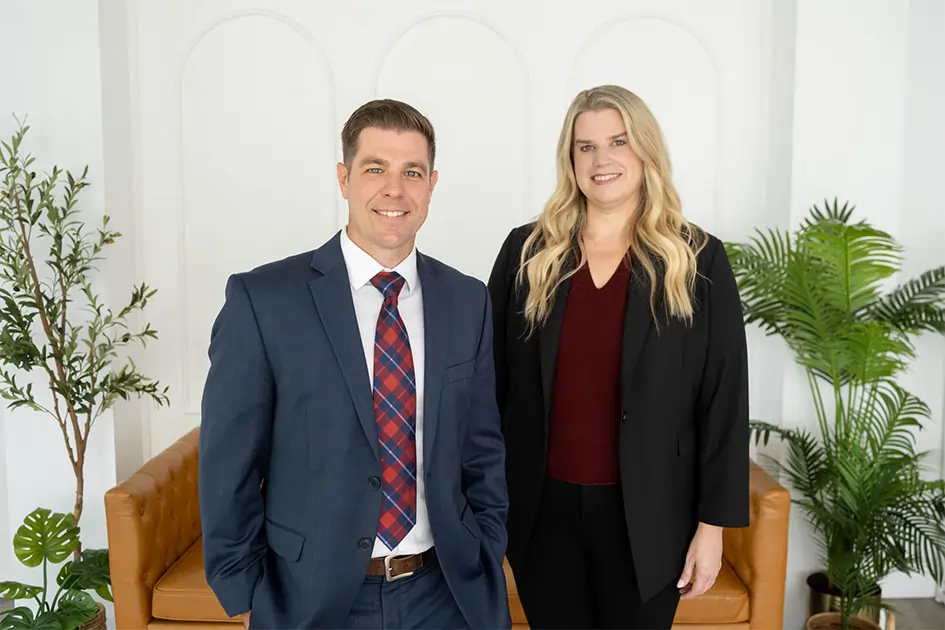
Founding partners Julie L. Glover and Adam R. Luck co-founded Glover Luck LLP in 2014 with one purpose: representing veterans who are fighting the VA for the benefits they earned. Both are VA-accredited attorneys, formally authorized to represent veterans in claims before the agency.
Julie holds a Juris Doctor from Texas A&M School of Law and an LL.M. in Taxation from the University of Alabama. She is admitted before the U.S. Court of Appeals for Veterans Claims, the Fifth and Tenth Circuits, and the Supreme Court of the United States, and her practice covers VA service-connected disability claims through federal court.
Adam earned his law degree from Texas A&M School of Law and a finance degree from Kansas State University. Before law school, he worked as a licensed financial advisor at USAA, where he saw how difficult the VA system was for veterans without legal help. He is admitted before the U.S. Court of Appeals for the Federal Circuit and holds membership in the Military Law Section of the American Bar Association.
Both are members of the National Organization of Veterans’ Advocates (NOVA). Adam also volunteers at free legal clinics for veterans at Dallas and Fort Worth VA medical centers through Texas Lawyers for Texas Veterans.
Results That Matter
Our firm has helped veterans across the country recover millions of dollars in VA disability benefits. We take the denials, the low ratings, the appeals that have been sitting at the Board for years, and the claims where records have gone missing. Our track record and roster of thousands of satisfied clients speaks for itself.
Admitted to Practice Where It Counts
Service-connected disability claims don’t always end at the regional office or even at the Board of Veterans’ Appeals. Sometimes they have to go further. Julie is admitted to the U.S. Courts of Appeals for the Fifth and Tenth Circuits and the Supreme Court of the United States. Adam is admitted to the U.S. Court of Appeals for the Federal Circuit.
No Fees Unless We Win
We represent service-connected disability clients in Miami on a contingency basis. No upfront costs, and no fee unless your case resolves in your favor.
⭐⭐⭐⭐⭐
“I was referred to Glover-Luck by Hill and Ponton. They not only got movement on my stalled claims, they helped me file for things I didn’t know I could claim, and things I didn’t know I was entitled to. Even after exhausting options with a VSO, the team at Glover-Luck got me the benefits that I’m entitled to. I have already recommended this Firm to other Veterans who are also having issues with the VA claims process. Hiring this Firm was the best decision I’ve made in a long time!” — Brian Connelly
Read more reviews on our Google Business Profile.
Types of Service-Connected Disability Cases We Handle in Miami
Service connection is the legal foundation of every VA disability claim. Without it, no compensation is possible. We help veterans establish, protect, and strengthen that connection across a wide range of conditions and claim types.
- Medical malpractice. When VA healthcare providers cause harm through negligent care, the resulting injury or worsened condition may itself become service-connected. These cases involve both a disability rating claim and a potential Federal Tort Claims Act filing. We handle both tracks together.
- Traumatic brain injuries. A Traumatic Brain Injury (TBI) is routinely misdiagnosed or underrated. Raters often fail to account for the full secondary symptom picture, which can include memory problems, mood disorders, chronic headaches, and sleep disruption. We build TBI claims with the complete picture in mind.
- PTSD and mental health conditions. PTSD is one of the most contested service-connected conditions in the VA system. Examiners dispute the stressor, the diagnosis, or the severity. We’ve handled PTSD claims arising from combat exposure, military sexual trauma, and other in-service events, and we know how to fight back when the VA gets it wrong.
- Psychiatric and mental health disabilities. Depression, anxiety, and other mental health disorders arising from service are often denied or rated far too low. We develop the full evidentiary record and challenge inadequate ratings.
- Direct service connection claims. Physical injuries, orthopedic conditions, respiratory disease, skin disorders, hearing loss, and any other condition that was incurred during or aggravated by active military service. If there’s a current diagnosis and a credible in-service event, we build the case around those facts.
- Secondary service connection. A condition that develops as a result of a service-connected disability can itself be service-connected under 38 C.F.R. § 3.310. A veteran with a service-connected knee injury who develops chronic back problems from altered gait, for example, may have a separate compensable claim.
- TDIU claims. When service-connected conditions prevent a veteran from maintaining gainful employment, Total Disability based on Individual Unemployability provides compensation at the 100 percent rate even if the combined schedular rating is lower.
- Rating increase and rating protection claims. A low rating isn’t always final. If your condition has worsened, or if the original rating was based on an inadequate exam, there are paths to a higher rating. Equally important, ratings that have been in place for years carry legal protections against reduction that the VA is required to respect.
Florida Legal Requirements for Service-Connected Disability Claims
Service-connected disability claims are governed by federal law, not Florida state law. But there are specific rules that every Miami veteran filing or appealing a claim must understand.
The three-element test under 38 C.F.R. § 3.303. Establishing service connection requires three things: a current diagnosis, evidence that an in-service event, injury, or disease occurred, and a medical nexus opinion linking the two. Under 38 C.F.R. § 3.303, service connection can be granted for conditions diagnosed after discharge when the overall evidence establishes the condition was incurred during service. This matters enormously for veterans whose conditions were not formally diagnosed until years after leaving the military.
Secondary service connection under 38 C.F.R. § 3.310. Per 38 C.F.R. § 3.310, any disability that is proximately due to or results from a service-connected disease or injury is itself service-connected. A non-service-connected condition aggravated by a service-connected disability can also be connected to the extent of that aggravation. Many veterans are unaware of these secondary claims.
Rating protections for long-standing service connections. Under 38 C.F.R. § 3.957, a service connection in effect for 10 or more years cannot be severed without clear and unmistakable error. The 5, 10, and 20-year protection rules are a significant but often overlooked layer of legal protection. ur blog on VA disability protections breaks down how these rules work.
Effective date rules. Compensation generally runs back to the date the claim was filed. Understanding what an effective date means and protecting it from the very start is one of the most important things we do for new clients. We seek back pay in situations when the VA delays or underpays, if it applies in your situation.
What Damages Are Recoverable in a Miami Service-Connected Disability Case?
Monthly disability compensation. VA disability payments are tax-free and calculated based on combined disability rating, running from 0 to 100 percent in 10-percent increments. A veteran rated at 100 percent in 2026 receives over $3,700 per month with no dependents, with additional amounts for a spouse, children, or dependent parents. The VA’s combined ratings table uses a formula that is not simple addition, which routinely results in veterans being rated lower than their individual conditions suggest. We understand that formula and challenge ratings that do not apply it correctly.
Retroactive back pay. When a claim is granted or a rating increases, compensation runs back to the date the claim was originally filed. For veterans who have spent years in the appeals process, that back pay can be substantial. Challenging an incorrect effective date can result in even larger awards when the original decision contained legal error.
Special Monthly Compensation. Veterans with particularly severe service-connected conditions may qualify for SMC above the standard disability rate, including those needing aid and attendance, those who are permanently housebound, and those who have lost use of certain extremities or organs. SMC is frequently missed in initial decisions and can add significantly to a monthly benefit.
Secondary condition ratings. Each service-connected secondary condition gets its own disability rating, combined with the primary rating using the VA’s formula. Veterans who have not developed their secondary conditions are often receiving far less than they are entitled to. We evaluate the complete clinical picture on every case.
VA healthcare and related benefits. Service-connected veterans receive VA healthcare for connected conditions at little or no cost. Additional benefits can include adaptive housing grants, vocational rehabilitation, and Dependency and Indemnity Compensation for surviving family members through our death and survivor benefits practice.
Contact Glover Luck LLP
Service connection is the gateway to everything else in the VA system. Getting it right from the start matters, and fighting back when the VA gets it wrong matters just as much. Whether you are filing a first claim, challenging a denial, or trying to get a rating that reflects your actual condition, our Miami service-connected disability lawyer is ready to evaluate your case.
Consultations with Glover Luck LLP are free. We work on contingency, so you pay nothing unless your case is resolved in your favor. Contact us today to get started.
Service-Connected Disability Statistics in Miami, FL

Florida’s veteran population exceeds 1.4 million, making it the third-largest in the country behind Texas and California. More than 500,000 of those veterans carry a service-connected disability rating, according to the Florida Department of Veterans’ Affairs. Miami-Dade, Broward, and Palm Beach counties account for a significant share of the state’s veteran community, and the St. Petersburg Regional Office processes disability claims for veterans across all of Florida.
Nationally, the VA processed over 2.5 million claims in fiscal year 2024 and paid out more than $173 billion in compensation and pension benefits, per VBA claims data. But processing volume does not always produce fair results. As of January 2026, Florida held the second-highest claims backlog in the country, with more than 10,000 claims pending past the VA’s 125-day target. For Miami veterans with a service-connected condition, that backlog can mean months without the benefits they are owed.
- Florida is home to more than 1.4 million veterans and over 500,000 service-connected disabled veterans.
- Florida had the second-highest VA claims backlog in the nation as of January 2026, behind only Texas.
- Approximately 36% of VA disability claims were initially denied nationwide in FY 2024.
- Florida accounted for $13.1 billion in annual disability compensation in FY 2025, the highest of any state.
- The average disability rating granted nationally in FY 2024 was 70%, equating to over $20,000 per year in tax-free benefits.
Mistakes That Can Damage Your Service-Connected Disability Claim
Filing for service-connected disability involves more moving parts than most veterans anticipate. Errors at any stage of the process can stall a claim, reduce a rating, or result in a denial that takes years to undo. These are among the most common mistakes our attorneys encounter in Miami, FL cases.
- Filing without a nexus opinion. The VA requires a medical link between the current condition and the in-service event. Without that opinion in the file, the VA is free to deny the claim outright or order its own examination. The VA’s exam may not be favorable. Private nexus opinions from physicians who reviewed the complete record carry weight and should be part of the initial filing whenever possible.
- Underreporting symptoms at the C&P exam. Veterans often downplay their condition. Some do it out of habit. Others do not want to appear weak. But when the examiner documents normal findings because the veteran minimized symptoms, that is what the rater sees. The rating decision follows the medical evidence on the page, not the reality the veteran lives with every day. Knowing how to prepare makes a measurable difference.
- Missing the one-year window after separation. A veteran who files within twelve months of discharge can receive an effective date going back to the day after separation. Missing that window does not eliminate the right to file, but it can cost years of back pay. The difference between a January and a February filing date has, in some cases, amounted to tens of thousands of dollars.
- Relying on VA treatment records alone. VA records may not capture the full scope of a condition. Private medical records, lay statements from family members, and buddy statements from fellow service members can all strengthen a claim. Veterans who submit nothing beyond what the VA already has on file often end up with a thinner evidentiary record than needed.
- Ignoring secondary conditions. A service-connected knee injury that alters a veteran’s gait can lead to chronic back problems. PTSD can cause or worsen conditions like sleep apnea, migraines, or substance use disorders. Many veterans never file for these mental health conditions or physical secondaries, and the missed ratings accumulate over time.
- Choosing the wrong appeal lane. After a denial, veterans must choose between a higher-level review, a supplemental claim, or a Board appeal. Each one operates under different rules about whether new evidence can be submitted and whether a hearing is available. Filing in the wrong lane wastes time and can limit the veteran’s options going forward.
- Accepting a low rating without challenge. Some veterans assume the initial decision is final. It is not. Conditions that worsen over time may justify a higher rating, and the original decision itself may contain errors the veteran would not recognize without legal review.
- Failing to attend scheduled examinations. When the VA orders a C&P examination and the veteran does not show, the claim can be decided on the existing record, which is rarely sufficient for a favorable outcome. Rescheduling is almost always possible, and the consequences of a missed exam are difficult to reverse.
Miami, FL Service-Connected Disability Lawyer FAQs
What Does “Service-Connected” Mean in a VA Disability Claim?
Service connection is the legal determination that a current disability is linked to an injury, illness, or event that occurred during military service. It is the threshold requirement for all VA disability compensation. Without it, the VA will not pay benefits regardless of the condition’s severity or the veteran’s need.
How Can I Prove Service Connection for a Condition Diagnosed After Discharge?
A diagnosis does not have to appear in service records. Many conditions develop only after a veteran leaves the military. Under federal regulation, a condition diagnosed after discharge can be service-connected if the evidence establishes a link to an in-service event. A physician’s nexus opinion is the most common way to build that link.
How Long Do Appeals Take for Service-Connected Disability Cases in Florida?
It depends on the appeal lane. Higher-level reviews have recently averaged about 141 days. Supplemental claims average approximately 93 days. Board of Veterans’ Appeals cases take considerably longer, sometimes more than a year depending on the docket and whether a hearing is requested. Florida’s large veteran population contributes to processing pressure at the regional office level.
What Happens at a C&P Examination?
The compensation and pension exam is a medical evaluation scheduled by the VA to assess the severity and origin of a claimed condition. The examiner reviews the veteran’s records, asks questions, and conducts a physical or psychological evaluation. The examiner’s report goes directly to the rater who decides the claim. Veterans who walk in unprepared often receive findings that understate the condition.
Can I Reopen a Previously Denied Service-Connected Claim?
Yes. A supplemental claim allows veterans to resubmit a previously denied condition with new and relevant evidence. The evidence must be something the VA did not previously consider. This could be a new medical opinion, updated treatment records, or a buddy statement that was not part of the original file.
Do I Need an Attorney for a Service-Connected Disability Claim in Miami, FL?
An attorney is not required. But for claims that have been denied, underrated, or stalled, legal representation changes the dynamic. Attorneys accredited by the VA understand how the appeals process works, where the evidence gaps are, and what arguments the VA is required to address.
What Is the Difference Between Direct and Presumptive Service Connection?
Direct service connection requires evidence of an in-service event, a current diagnosis, and a nexus linking the two. Presumptive service connection applies when the VA recognizes that certain conditions are so closely associated with particular types of service that the nexus is assumed. Conditions tied to Agent Orange, burn pit exposure, and certain chronic diseases diagnosed within a year of discharge are common examples.
Can I Receive Both VA Disability and Social Security Disability?
Yes. The two programs are administered by different agencies and use different criteria. Receiving Social Security Disability Insurance (SSDI) does not reduce VA compensation, and VA benefits do not reduce SSDI. However, veterans receiving TDIU should understand that SSDI income may be reviewed in connection with the VA’s assessment of employability.
What Conditions Are Most Commonly Service-Connected?
The most frequently rated service-connected conditions include tinnitus, musculoskeletal injuries, hearing loss, PTSD, and lumbar spine conditions. But service connection is not limited to common diagnoses. Any condition with a credible in-service origin and adequate medical evidence can qualify, including those linked to Gulf War service and toxic exposure.
What Should I Bring to My Consultation With a Service-Connected Disability Attorney?
Bring your DD-214, any VA rating decisions or correspondence, medical records related to the claimed condition, and a written summary of the in-service event. If you have prior appeals or denial letters, those help us identify where the claim broke down. The consultation is free, and there is no obligation to retain the firm.
Important Resources for Miami, FL Service-Connected Disability Cases
Miami VA Facilities and Veteran Service Resources
Veterans in the Miami area have access to both federal VA facilities and state-level resources that can assist with medical treatment, benefits counseling, and claims support.
- Miami VA Healthcare System: Bruce W. Carter VA Medical Center, 1201 NW 16th St, Miami, FL 33125, 305-575-7000
- St. Petersburg Regional Office: 9500 Bay Pines Blvd, St. Petersburg, FL 33744, 800-827-1000
- Florida Department of Veterans’ Affairs: 800-827-1000
- Miami-Dade County Veterans Service Office: 305-375-4643
Glover Luck LLP does not endorse and is not affiliated with any of the organizations listed above. These resources are provided for informational purposes only.
About Glover Luck LLP
Glover Luck LLP has represented veterans in service-connected disability claims and appeals since 2014. Both founding partners hold admission to practice before the U.S. Court of Appeals for Veterans Claims, where many contested disability decisions are ultimately resolved. The firm’s attorneys have secured rating increases, reversed denials, and obtained TDIU awards for veterans at every stage of the claims process.
What Our Clients Say
★★★★★
“If you want a team that will get you results, go with GloverLuck and their fantastic team! I’m so glad they chose to represent me for my VA disability claim. Thank you Adam and team for all your help, I will always be grateful for your support and dedication to helping veterans and their families!” – Gabriel Goodwin
Read more reviews on our Google Business Profile.
Additional Resources for Miami Service-Connected Disability Cases
- VA Disability Ratings and Compensation
- When the VA Claims Your Condition Was Pre-Existing
- Challenging a VA Rating Reduction Proposal
- VA Reexaminations and When to Expect Them
- When VA Conditions Appear Years After Service
Contact Glover Luck LLP
If the VA has denied your service-connected disability claim, underrated your condition, or reduced a rating you believe should stand, Glover Luck LLP is ready to review your case. We offer free consultations for veterans in Miami, FL, and nationwide, and we work on contingency, which means no fee unless we recover benefits on your behalf. Our attorneys will evaluate your records, explain your options, and outline the strongest path forward. Contact us today to schedule your free case evaluation.