Speak with a dedicated Miami VA PTSD attorney about your disability claim.
When post-traumatic stress disorder connected to your service goes unrecognized, or the VA assigns a rating that understates it, a Miami, FL VA PTSD lawyer can help you pursue the benefits the condition warrants. Glover Luck LLP has represented veterans in claims and appeals since 2014, and veterans’ benefits law is the only work we do. We know how the VA evaluates these claims and where they tend to break down. If your claim was denied or your rating is too low, we can help. Reach out today for a free consultation.
VA PTSD Lawyer Miami, FL
Post-traumatic stress disorder is one of the conditions eligible for VA disability compensation when it results from a traumatic event during military service. That event might be combat, military sexual trauma, a serious accident, or another experience that meets the VA’s stressor standard. A Miami VA PTSD attorney helps veterans prove the connection between the diagnosis and service, document the severity of symptoms, and secure a rating that reflects the real effect on daily life and work. For many veterans, the obstacle is not whether they have PTSD but whether the VA will accept the evidence that shows it.
What makes these claims difficult is rarely the diagnosis itself. It is the proof. The VA weighs the strength of the stressor evidence and the medical opinion that ties it to the current condition, and it measures how far the symptoms limit your functioning. We handle that evidentiary work and present the claim in the terms the VA uses to decide it.
Types of VA PTSD Claims We Handle in Miami
PTSD claims reach us at every stage and from many origins. Some veterans are documenting a stressor for the first time. Others hold a rating that no longer matches their symptoms, or a denial that overlooked key evidence. These are the claims our Miami lawyers handle.
- Combat-related PTSD. PTSD that follows combat or fear of hostile activity is among the most common claims we see. We help establish the stressor and connect it to the diagnosis, which is often more direct when service records reflect the events in question. Where the record is thin, we develop the stressor evidence the claim needs.
- PTSD from military sexual trauma. Assault or harassment during service can also cause PTSD. These claims rely on a broader range of supporting evidence because the events were frequently never reported at the time they occurred.
- Traumatic brain injury. TBI and PTSD often occur together after a blast or head injury, and their symptoms overlap. We claim both conditions and work to distinguish their effects, which matters for how each one is rated.
- Secondary conditions. Beyond the condition itself, veterans frequently develop related problems the VA will rate, from sleep apnea to chronic pain and depression. We claim these alongside the primary condition so the full disability picture reaches the VA.
- Rating increases. A PTSD rating can lag well behind worsening symptoms. We pursue a higher evaluation when the current rating understates how the condition affects work and relationships.
- Individual unemployability. When PTSD makes steady employment impossible, a veteran may be compensated at the total disability level even without a 100 percent schedular rating. We assemble the work history and medical evidence on which these claims depend.
- Denied and appealed claims. A denial often reflects a gap in the record rather than the absence of a valid claim. We identify what was missing and pursue the review path that fits the case. Often the strongest addition is a well-supported medical opinion.
Why Choose Glover Luck LLP as My Miami VA PTSD Lawyer?
A Firm Devoted to Veterans’ Benefits
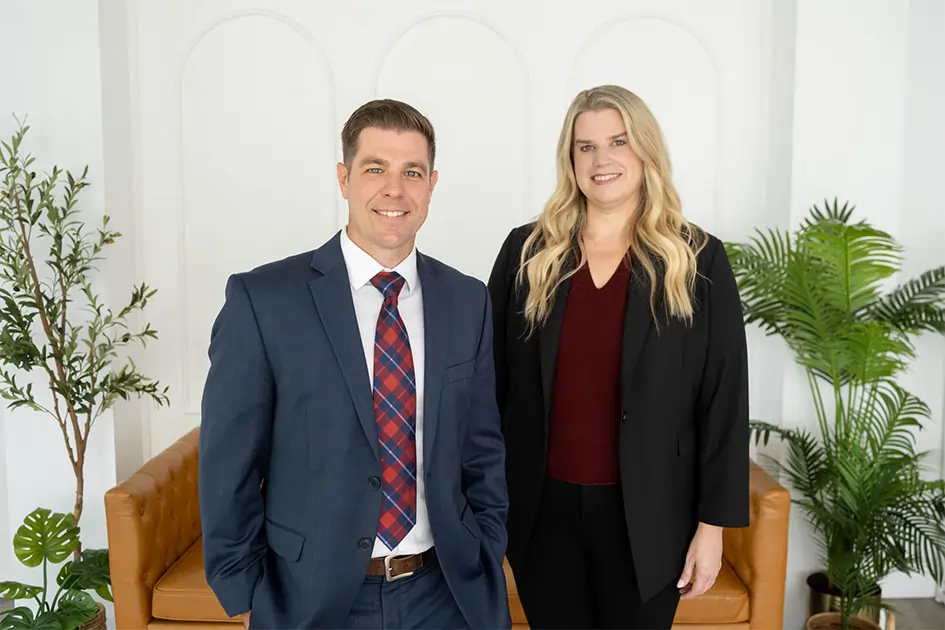
Glover Luck LLP was built for a single purpose. Adam R. Luck and Julie L. Glover started the firm in 2014 to represent veterans, and both hold accreditation from the VA to do so. Before entering law, Adam Luck advised active service members and veterans as a financial professional, work that shaped the firm’s direction. Both founders belong to the National Organization of Veterans’ Advocates, a national veterans advocacy organization. Because PTSD claims turn on evidence and rating standards more than on the diagnosis, that concentration matters. As a veterans disability lawyer in Miami, FL, our firm handles PTSD claims from the first filing through every level of review.
Prepared to Appeal When the VA Gets It Wrong
Many veterans reach us after a denial or a rating that fell short, and appeals are a central part of what we do. We take PTSD cases through higher-level review before the Board of Veterans’ Appeals and, when the record requires it, to the U.S. Court of Appeals for Veterans Claims. Over more than a decade, we have helped veterans overturn denials, raise ratings, and recover benefits owed from earlier effective dates.
Understanding VA PTSD Claims
What the VA Requires to Approve a PTSD Claim
A PTSD claim succeeds on three findings. There must be a current diagnosis, a traumatic event during service, and a medical link between the two. That link is usually supplied by a clinician’s opinion. When the VA accepts all three, the claim is granted, and the condition receives a rating. This is the framework for disability compensation for PTSD, and it holds whether the stressor was combat, an accident, or personal trauma, though the evidence used to prove the stressor differs from one origin to the next. Combat service is frequently documented in the record, while an assault or harassment during service usually calls for other forms of proof. The finding that connects the diagnosis to service is called service connection.
The three findings break down as follows:
- A current diagnosis. A PTSD diagnosis from a qualified clinician, made under recognized diagnostic criteria.
- An in-service stressor. The traumatic event is established through service records or, when those are silent, through other supporting evidence.
- A medical nexus. A professional opinion connecting the current diagnosis to the in-service stressor.
How the VA Rates PTSD
A rating does not rest on the diagnosis alone. It reflects how far the condition limits social and occupational functioning, expressed as a percentage. Two veterans with the same diagnosis can receive very different ratings, depending on the severity and frequency of their symptoms and how those symptoms affect work and relationships. Higher ratings reflect more severe and persistent impairment in those areas, so the difference between one level and the next can be significant for a veteran and their family. That is one reason documenting PTSD symptoms thoroughly carries so much weight. The VA typically arranges an examination to assess the condition, and the examiner’s findings often shape the result. We help veterans assemble the evidence, from treatment records to statements about daily functioning, that supports an accurate rating rather than a conservative one.
How Long Does a PTSD Claim Take?
There is no single answer. A claim with strong evidence and no appeal can be resolved in a matter of months. One that needs further development or review takes considerably longer. Most claims follow a recognizable path.
- Filing the claim. You submit the claim and supporting evidence, or ask us to file your VA claim for you.
- Development. The VA gathers records and usually orders an examination to evaluate the condition.
- The rating decision. The VA grants or denies the claim and assigns a disability percentage.
- Review. If the outcome is wrong, we pursue the available appeal options, from higher-level review to a Board appeal.
Preparing for a Consultation About Your PTSD Claim
A first meeting does not require a finished file. Bringing what you have lets us assess the claim and identify what still needs to be gathered.
- Your most recent VA rating decision or denial letter.
- Records of your PTSD diagnosis and any mental health treatment.
- Service records, including anything that documents the stressor.
- Statements from family, friends, or fellow service members who noticed changes in you.
The consultation is free and confidential. Our team will explain the claim, the next steps, and how our firm would handle it.
What Are Important Florida Resources for Veterans With PTSD?
Veterans in Miami can reach both federal and state resources for care and claims support while a case is pending. Several of them are specific to PTSD and readjustment.
- The Miami VA Healthcare System provides medical and mental health care, including PTSD treatment, at the Bruce W. Carter VA Medical Center.
- The Miami Vet Center offers confidential readjustment counseling for combat stress, PTSD, and related concerns.
- The Florida Department of Veterans’ Affairs staffs County Veteran Service Offices that assist with benefits and claims at no cost.
Reach Out to Glover Luck LLP About Your PTSD Claim
If you want a clear assessment of your PTSD claim, we are ready to help. The consultation is free, and because attorney fees in veterans’ benefits cases follow federal rules, we will explain how representation would work before you commit to anything. Contact us to schedule a consultation today.