Are you looking for a VA disability compensation lawyer in Florida?
At Glover Luck, LLP, we provide VA disability compensation representation grounded in more than 12 years of work on behalf of clients in Florida.
If the VA denied your claim or assigned a rating that does not match your condition, that decision can be challenged. Compensation is paid monthly and tax-free. Because the amount follows from your combined rating and your dependents, it’s important for your rating to be complete and correct.
Our Florida VA disability compensation lawyer can gather the service records, treatment history, and medical opinions a claim needs. Glover Luck, LLP has represented veterans in benefits matters since 2014, and both founders hold VA accreditation.
Request a free review of your rating decision.
VA Disability Compensation Lawyer Florida
VA disability compensation is a tax-free monthly payment for conditions incurred or aggravated during military service. The amount depends on the combined rating the VA assigns and on the number of dependents in the household. Ratings are calculated by combining individual evaluations rather than adding them.
At the close of fiscal year 2025, 536,424 Florida veterans were on the compensation rolls, receiving an estimated $15.3 billion over the year. Reaching those rolls starts with service connection. A claim needs a current diagnosis, an in-service event or exposure, and medical evidence connecting the two.
Types of VA Disability Compensation Cases We Handle in Florida
Compensation claims arrive at our firm at every stage, from a first filing to a remand from the Board. Our Florida VA disability compensation attorneys handle the matters listed below. Each one comes back to the same question of what the service record and the medical evidence will support.
- Service connection. Establishing the link between a current condition and military service is the threshold every claim has to clear. We identify which element the VA found lacking and develop evidence addressing that specific gap rather than refiling the same package.
- Increased rating claims. A rating assigned years ago often understates a condition that has worsened since. We gather current treatment records and, where useful, an examination that measures the condition against the criteria the VA actually applies.
- Presumptive conditions. Certain illnesses tied to Agent Orange, burn pits, radiation, and Gulf War service are recognized without proof of a direct medical link. Confirming that a veteran’s service and diagnosis both fall inside the recognized categories is usually where these claims are won.
- Secondary conditions. A connected disability that causes or worsens another condition supports a separate rating. Sleep apnea following PTSD and depression following chronic pain are two of the more common pairings, and each needs its own medical opinion.
- VA TDIU. Veterans whose service-connected conditions prevent substantially gainful employment can be paid at the 100% rate without a 100% rating. We raise unemployability alongside the compensation claim when the work history supports it.
- VA rating reduction. A proposed reduction after a reexamination carries a response window and a right to a hearing. We answer the proposal with evidence that the condition has not improved under ordinary conditions of life.
- VA migraine. Headache ratings depend on how often attacks occur and how completely they interrupt activity, which is poorly captured in most treatment records. We build the frequency record the criteria call for.
- Military sexual trauma. MST claims may be supported by markers in the service record rather than a formal report, and many veterans are never told this. We identify those markers and present them with the mental health evidence.
- Medical malpractice VA disability. Injury caused by VA treatment can support compensation separate from any service-connected condition. These matters involve different proof and different filing requirements from an ordinary rating claim.
Why Choose Glover Luck, LLP as My VA Disability Compensation Lawyer in Florida?
A Practice Limited to Veterans Benefits
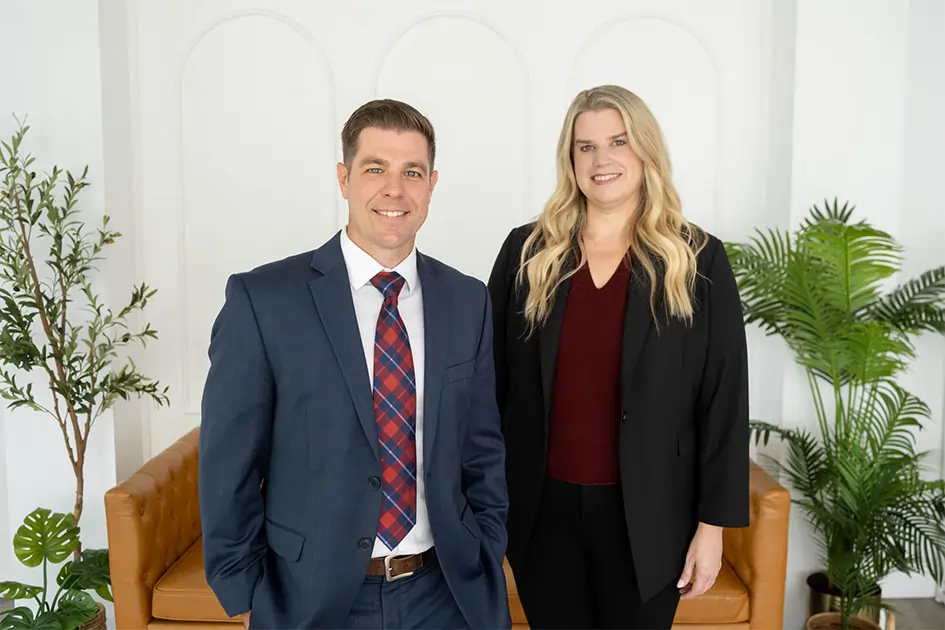
Julie L. Glover and Adam R. Luck built the firm around VA disability work in 2014, and both continue to practice in it. Veterans law is its own body of procedure, with filing rules and evidentiary standards that have no counterpart in state civil practice, and both founders meet the federal accreditation standards required to charge a fee for representation. Unlike a service organization representative, accredited attorneys and agents may take a case through the Board and into federal court. Julie L. Glover also handles tort claims brought against the VA itself. Adam R. Luck is admitted to the U.S. Court of Appeals for the Federal Circuit, which reviews decisions of the veterans court on questions of law, and holds membership in the Military Law and Administrative Law Sections of the American Bar Association.
Evidence Development and Medical Nexus Support
Most denials we see are evidentiary rather than legal. The condition is documented, the service is documented, but nothing in the file connects them. We obtain service treatment records and personnel files, work with treating physicians on opinions written to the standard the VA applies, and identify where an independent medical examination will carry more weight than another lay statement. That development work is what separates a refiling from an appeal with something new in it, and it is the reason many veterans retain a veterans disability lawyer in Florida rather than resubmitting alone.
What Is Important To Understand About VA Disability Compensation Cases?
Service Connection, Ratings, and Compensation for VA Disability Claims
Service connection is the threshold determination, and the rating follows from how severely the connected condition limits function. Ratings run from 0% to 100% in increments of 10%.
- Direct service connection, proven with evidence tying a service-connected disability to an event or exposure during service
- Presumptive service connection, recognized for certain conditions without proof of a direct medical link
- Secondary service connection, for conditions caused or aggravated by an already connected disability
- Aggravation, where military service worsened a condition that existed before enlistment
- Combined ratings, calculated on a whole-person basis, so two 50% evaluations do not produce 100%
- Special monthly compensation, paid above the schedular rate for loss of use, aid and attendance, and similar circumstances
What Is The VA Disability Compensation Case Timeline?
Processing times depend on the evidence already in the file and on whether the VA orders an examination.
- Filing the claim, with service records and private treatment records submitted at the same time where possible
- Evidence development, including a C&P examination if the VA needs a current assessment
- A rating decision from the regional office, stating the percentage assigned and the effective date
- A decision review, chosen from the three decision review options available after an unfavorable outcome
- A Board appeal on VA Form 10182, filed within one year of the decision letter
Veterans who appeal a decision successfully are generally paid back to the original effective date, which is why the date on the first filing matters as much as the rating itself.
What Are Important Aspects of a VA Disability Compensation Case?
The VA decides these claims on the written record, and the record is rarely complete when a veteran files alone.
- The nexus opinion. A physician statement connecting the condition to service, written with reasoning rather than a conclusion, carries more weight than any other document in the file.
- The examination report. A brief or inaccurate examination can hold a rating down for years, and it can be challenged.
- Rating protections. Long-held evaluations become harder for the VA to disturb over time, and rating protections apply at set intervals.
- Reexaminations. Conditions expected to improve are scheduled for review, and reexaminations can lead to a proposed reduction.
- Lay evidence. Statements from family, coworkers, and fellow service members establish facts that medical records do not capture.
Florida VA Facilities and Claim Resources
Florida veterans receive care through several VA systems, including the Bay Pines Healthcare System, which operates a medical center and eight clinics across the central southwest part of the state. Treatment records from those facilities are frequently the evidence a compensation claim depends on, and we request them directly rather than asking a veteran to chase them down.
The state also places State Veterans’ Service Officers at VA medical centers and clinics throughout Florida, and their assistance is free. They are a reasonable starting point for a first filing. Once a decision is unfavorable, a VA disability compensation attorney in Florida can take the matter through review and appeal.
What Should You Bring to Your VA Disability Compensation Consultation?
Whatever you have on hand is enough to start, and we can obtain the rest.
- Your DD-214 and any service treatment records you kept
- The rating decision or denial letter you received
- Private medical records for the conditions you are claiming
- Notes on when symptoms began and how they have changed
The meeting covers what the VA decided, what the file is missing, and what evidence would change the outcome. There is no charge, and no obligation to hire the firm.
Reach Out to Glover Luck, LLP to Schedule a Consultation
Glover Luck, LLP accepts compensation claims and appeals from veterans across Florida, and the initial review costs nothing. Contact us with your rating decision and we will tell you what the evidence supports. We respond promptly to every inquiry. Our Florida VA disability compensation lawyer can handle the filing, the review, and any appeal that follows.