Are you looking for a service-connected disability lawyer in Florida?
At Glover Luck, LLP, we have been serving clients in Florida service-connected disability matters with more than 12 years of combined legal experience.
If the VA has not linked your condition to your military service, you will not receive a rating or a monthly payment for it. That link is called service connection, and every claim starts there.
Our Florida service-connected disability lawyer can trace a condition back through service treatment records, the personnel file, and post-service care. Glover Luck, LLP was founded in 2014 to represent veterans in benefits matters, and both founders are accredited by the VA.
A first review of your file costs nothing.
Service-Connected Disability Lawyer Florida
A service-connected disability is a condition the VA has determined was caused or made worse by military service. Three things establish it: a current diagnosis, an injury, illness, or exposure during service, and medical evidence connecting the two. Absent that third element, the first two carry no weight on their own.
Of the 536,424 Florida veterans on the FY2025 compensation rolls, 311,732 were 55 or older. Conditions claimed decades after discharge are ordinary rather than unusual. They also place the burden on records that are old, thin, or held somewhere other than the VA.
Types of Service-Connected Disability Cases We Handle in Florida
How service connection is proven depends on how the condition arose. Our Florida service-connected disability attorneys handle the claim types below. Most veterans who come to us are disputing one of them.
- Direct service connection. The standard route, requiring a documented in-service event and a medical opinion tying the current condition to it. We work with treating physicians on opinions written with reasoning rather than a bare conclusion.
- Presumptive service connection. Certain conditions are accepted without proof of a direct link once service in a qualifying location and period is shown. Whether a veteran has a presumptive condition usually comes down to dates and duty stations in the personnel file.
- Secondary service connection. A condition caused or worsened by an already connected disability supports its own rating. Sleep apnea after PTSD, and anxiety disorders after chronic pain, are among the pairings we see most.
- Aggravation of pre-existing conditions. Service that worsened a condition a veteran entered with supports compensation for the degree of worsening. When the VA labels something a pre-existing condition, entrance examination records usually decide the dispute.
- VA disability compensation. Once service connection is granted, the rating percentage sets the monthly payment. We pursue both determinations rather than treating them as separate matters.
- VA TDIU. Connected conditions that prevent substantially gainful work support payment at the 100% rate. Unemployability is raised alongside the underlying claim where the employment history supports it.
- VA migraine. Headache claims are frequently connected as secondary to a head injury or to medication taken for another connected condition. Establishing that chain requires a specific medical opinion.
- Military sexual trauma. MST claims may be proven through markers in the service record where no formal report exists. Performance changes, transfer requests, and treatment for anxiety can all serve that purpose.
- VA rating reduction. The VA can propose to lower a rating after a reexamination, and in narrower circumstances it can propose to sever service connection altogether. We file the response and request a hearing before either one takes effect.
- Medical malpractice VA disability. Injuries caused by VA treatment can support compensation even where the underlying condition was never connected to service. The proof required differs from an ordinary claim.
Why Choose Glover Luck, LLP as My Service-Connected Disability Lawyer in Florida?
Attorneys Who Represent Veterans Nationwide
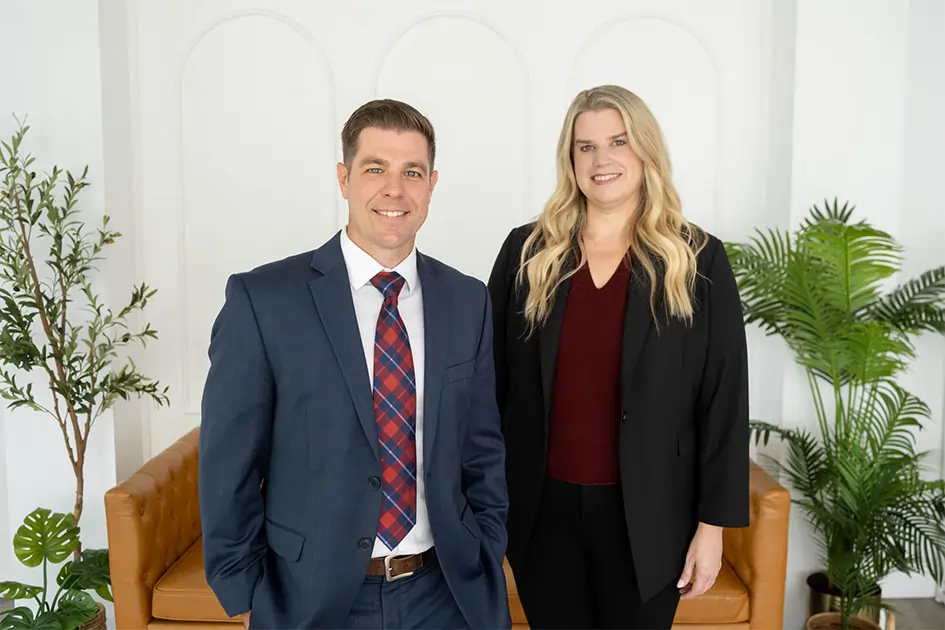
Julie L. Glover co-founded the firm in 2014 specifically to address the difficulty veterans encounter in obtaining benefits they have earned, and she represents veterans in every phase of the VA disability process. Her admissions include the Fifth and Tenth Circuit Courts of Appeals along with federal district courts in Texas, Colorado, and New Mexico. Adam R. Luck handles disability claims alongside pension matters and military discharge upgrades, and he volunteers at free legal clinics serving veterans. Both hold VA accreditation, which is what permits a private attorney to represent a claimant against the agency. The firm takes cases from veterans across the country, and that volume produces familiarity with how particular exposure presumptions and service eras are treated in practice.
Why Service Connection Claims Get Denied
Most denials fail due to one missing element rather than an invalidity of the entire claim. We read the decision to find which element the VA said was absent, then gather evidence for that element instead of resubmitting the whole file. The in-service event is documented but no nexus opinion is present. A nexus opinion is present but the examiner gave no reasoning. The condition appears on a presumptive list but the personnel file does not yet show qualifying service. Each of those requires different evidence. Our veterans disability lawyer in Florida carefully evaluates each stage of your claim, then makes the right recommendations for your situation.
What Is Important To Understand About Service-Connected Disability Cases?
Evidence, Nexus, and Proof of Service Connection
The VA decides these claims on documents. What a veteran remembers matters only to the extent it reaches the file in a form the adjudicator can use.
- Service treatment records and the personnel file, which fix what happened and where a veteran served
- A current diagnosis from a qualified provider, since a symptom without a diagnosis cannot be connected
- A nexus opinion stating the likelihood that service caused the condition and explaining the basis for that view
- Lay statements from family, coworkers, and fellow service members, which establish continuity of symptoms
- Exposure records, relevant where hazardous materials exposure supports a presumption
- The entrance examination, which controls any dispute over whether a condition pre-dated service
What Are Important Aspects of a Service-Connected Disability Case?
Presumptions do most of the heavy lifting in toxic exposure claims, because they remove the nexus requirement entirely.
- The Agent Orange presumption covers service in defined locations between 1962 and 1975
- The PACT Act added more than twenty burn pit and toxic exposure conditions for Gulf War era and post-9/11 veterans
- Undiagnosed illnesses connected to Gulf War service in Southwest Asia on or after August 2, 1990 are presumed related
- Camp Lejeune water contamination supports presumptive connection for a defined list of conditions
- Ionizing radiation claims and asbestos exposure claims turn on occupational specialty and duty location
- Conditions appearing within a year of discharge may qualify under the one-year discharge presumption
Where Florida Veterans Obtain Claim Records
Most Florida veterans receive VA care inside the Sunshine Healthcare Network, which covers the state through eight medical centers and roughly ninety outpatient clinics. The VISN 8 facility directory lists each location. Treatment records from those facilities are usually the strongest proof of a current diagnosis, and we request them on a veteran’s behalf.
Older service records are a separate problem. Files from earlier decades are frequently held at federal records centers rather than by the VA, and a 1973 fire at the National Personnel Records Center destroyed millions of Army and Air Force files. A service-connected disability attorney in Florida can request those records, and where they no longer exist, build the claim on alternate sources such as unit records, pay records, and statements from those who served alongside you.
What Is The Service-Connected Disability Case Timeline?
Processing depends on the type of connection claimed and on whether the VA must request records from another agency.
- Filing. Submitting the claim, ideally with private records attached rather than left for the VA to request. Veterans who file a claim with evidence in hand shorten development substantially.
- Records development. The VA obtains service treatment records and the personnel file, which is where claims for conditions diagnosed after service most often stall.
- Examination. A compensation and pension examination addressing both the diagnosis and the connection question.
- Decision. A rating decision granting or denying connection, with the effective date stated.
- Review. Higher-level review, a supplemental claim, or a Board appeal, each part of the appeals process available after an unfavorable decision.
What Should You Bring to Your Service-Connected Disability Consultation?
Bring what is already in your possession. We can request the rest on your behalf.
- DD-214 and any service medical or personnel records you hold
- The denial or rating decision letter, including the reasons and bases section
- Private treatment records for the condition you are claiming
- Dates, locations, and duty assignments for the period when the condition began
- Any statements you have gathered from family or fellow service members
We will tell you which element the VA found missing and what evidence would address it, and we will say so plainly if the record does not support a claim. Conditions the VA once treated as unconnectable are now routinely granted. Conditions such as IBS and GERD are commonly connected once the right opinion is in the file.
Reach Out to Glover Luck, LLP to Schedule a Consultation
Glover Luck, LLP represents veterans throughout Florida in service connection claims and appeals, and the initial file review is free. Contact us with your decision letter and we will explain what the VA required and what it did not find. Messages are returned quickly, and the review carries no obligation. Our Florida service-connected disability lawyer can take the claim from there.